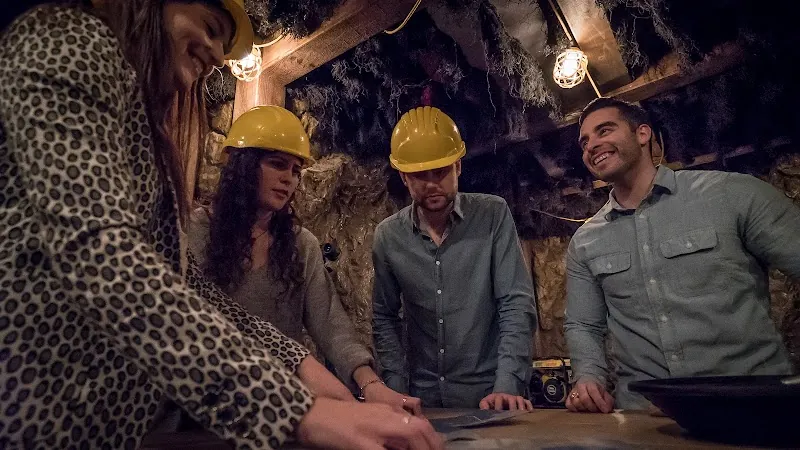
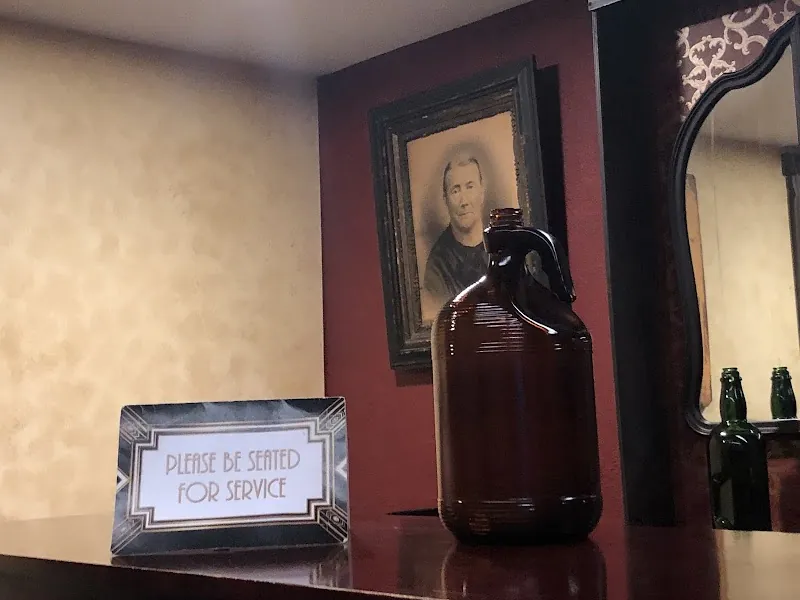
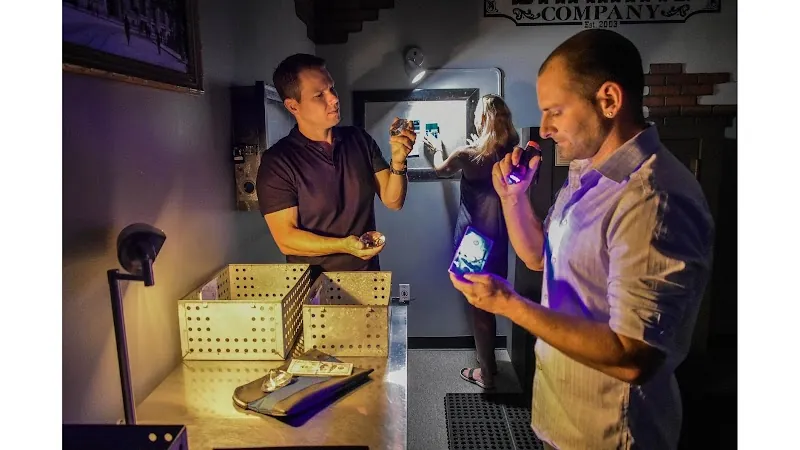
The Benefits of Escape Rooms: More Than Just Fun

Picture this: someone walks into an escape room for the first time, expecting maybe a glorified haunted house or a cheesy party game with padlocks on cardboard boxes. They figure they'll be bored in ten minutes. Then the door clicks shut, the clock starts ticking, and forty-five minutes later they're crouched on the floor, heart pounding, shouting "wait, the number on the painting, it matches the safe!" and genuinely forgetting that their phone exists. That's the moment people realize escape rooms are something else entirely. Not just a way to fill a Saturday afternoon, but a real mental workout, a social experience, and honestly, kind of a mirror that shows you exactly how you think and communicate under pressure.

So what exactly is an escape room? For anyone who hasn't tried one yet: you and a group of people are locked (or "locked") inside a themed space and given somewhere between 45 and 75 minutes to solve a series of puzzles, find hidden clues, crack codes, and ultimately escape. Rooms are usually themed around things like heists, mysteries, horror scenarios, or sci-fi adventures. You win by completing the objective before the timer hits zero. You lose by running out of time and doing the walk of shame past the game master. It's become a massive industry, there are 84 escape room businesses listed in the Escape Room Pal directory alone, with an average rating of 4.9 stars, which tells you people are not just going once and forgetting about it.
Below are seven real, concrete benefits of escape rooms that go way beyond just having a good time. Some of these might surprise you.
1. Escape Rooms Give Your Brain a Serious Workout
Most people don't walk into an escape room thinking "this will sharpen my critical thinking." They walk in thinking "this looks cool." But here's what actually happens inside: your brain starts doing things it almost never does in daily life. You're analyzing visual clues, recognizing patterns across multiple objects in a room, forming hypotheses, testing them, discarding the wrong ones fast, and doing all of it while a clock counts down in red numbers on the wall. That combination of pressure plus pattern recognition plus multi-step reasoning is genuinely rare in normal life.
Memory gets a real workout too. You might spot a symbol on a painting in the first five minutes that doesn't make sense until you find a related clue thirty minutes later. Holding that information, connecting it to new information, and acting on it quickly, that's not a skill most of us practice enough. Regular engagement with this kind of puzzle-solving has been linked to improved mental agility, better attention to detail, and stronger working memory over time. Not a bad side effect for something that feels like playing.
And the timed format specifically? That part trains something valuable: performing well under pressure without freezing. Managing a countdown teaches you to prioritize fast, cut losses on dead ends, and keep your head clear when the stakes feel high. People who do deadline-driven work, whether that's in finance, medicine, event planning, or anywhere else, often say the skills are almost identical. Stay calm. Focus on what matters. Don't waste time on what doesn't.
If you want the full cognitive benefit, resist the urge to take hints right away. Give yourself a real time limit before asking for help. That struggle period, where you're stuck and have to push through, is exactly where the mental growth happens.
2. They Reveal How You Actually Communicate (Not How You Think You Do)
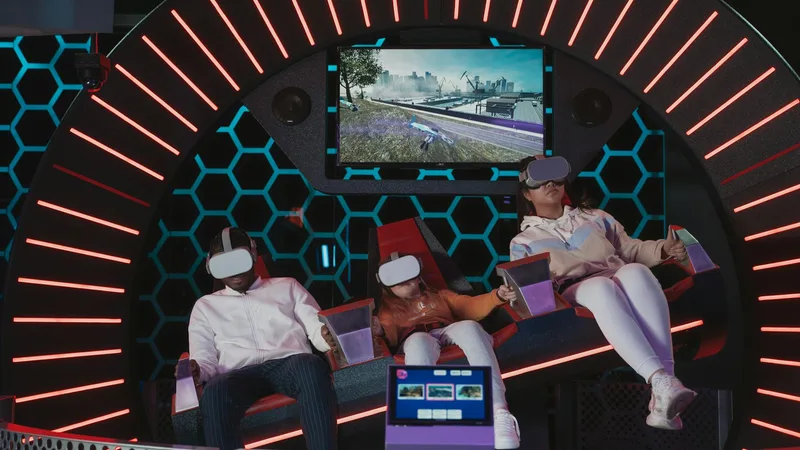
You can tell a lot about a group of people by watching them fail to escape a room together. Seriously. Someone will immediately start giving orders without asking questions. Someone else will find three clues and quietly hoard them, thinking they need to "solve it themselves." One person talks the whole time and contributes nothing. Another person barely talks and then quietly solves the hardest puzzle in the room. Escape rooms pull all of this out into the open in about fifteen minutes flat.
Poor communication in an escape room leads directly to failure. There's no softening that. If your team isn't sharing what they find, isn't listening to each other's ideas, and isn't delegating based on who's good at what, you will run out of time. That's not a metaphor. It's just how the game works. And because the failure is immediate and obvious, people actually learn from it in a way that a workplace seminar about "active listening" never quite achieves.
Groups also discover natural leadership dynamics they didn't know existed. Someone who's quiet in meetings will sometimes take over completely inside a room. Someone who usually leads will step back and let another person drive. These discoveries are genuinely useful self-awareness that carries over into real life, and that's why so many companies have started using escape rooms as actual corporate team-building events, not just a fun outing but a structured development activity with real takeaways.
Atlanta has 13 escape room listings in the directory, more than any other city, followed by New York with 9 and Columbus with 7. If you're planning a corporate event in any of those cities, you've got real options to choose from.
3. They're One of the Best Natural Stress Relievers Around
Here's something that sounds counterintuitive: a ticking clock, locked room, and unsolved puzzles is somehow relaxing. But ask anyone who's done a few of these and they'll tell you, for the hour you're inside, everything else disappears. Your work problems, your inbox, whatever you were anxious about on the drive over. Gone. Your brain is fully occupied with the puzzle in front of you, and it simply does not have bandwidth left to ruminate on everything else.
This is what psychologists call "flow state," that condition of total absorption in a challenging task where time seems to warp and your sense of self kind of dissolves into the activity. Escape rooms are almost perfectly designed to trigger it. The challenge is just hard enough to be engaging, just easy enough to feel solvable. And the whole environment, the dim lighting, the themed props, the sound design in a good facility, pulls you into a different world entirely.
Laughter happens constantly in escape rooms too, and I don't just mean polite chuckling. Real, embarrassed, genuinely surprised laughter when someone finally figures out the puzzle that had everyone stumped. That kind of communal laughter is a stress release that's hard to manufacture elsewhere. Add in the fact that you're completely away from screens and social media for an hour, and you've got something that functions almost like a proper digital detox.
Many people report feeling noticeably lighter and more energized after completing an escape room, even a hard one they didn't beat. The combination of social interaction, physical movement (yes, you move around a lot), and mental focus produces a mood boost that can last hours. Plan one before a stressful week, not after it.
4. Winning (and Losing) Builds Real Confidence
Finishing an escape room feels amazing. Full stop.
Not in a participation-trophy way. In a real, earned way. You started with a locked room full of confusing objects, and through actual thinking and actual teamwork, you figured it out. That feeling of accomplishment is genuine and it sticks. Psychologists call this "self-efficacy," basically your belief in your own ability to handle challenges. Every time you succeed at something genuinely difficult, that belief gets a little stronger. And every escape room is genuinely difficult, especially if you pick one above your experience level on purpose.
Losing also builds something, oddly enough. Groups that don't escape tend to immediately debrief, laughing and arguing about where things went wrong, what clue they missed, what they'd do differently. That kind of reflective thinking after a failure is actually a really healthy habit that a lot of people never practice. You tried something hard, it didn't work, you figured out why, and now you want to try again. That's it. That's the whole growth loop.
Look at the review numbers for the top venues in the Escape Room Pal directory. Mastermind Escape Games Augusta in Augusta, GA has a 5.0-star rating across 17,024 reviews. Breakout Escape Rooms Royal Oak in Royal Oak, MI sits at 5.0 stars with 16,590 reviews. Beat The Bomb Brooklyn in New York has 15,799 reviews at 5.0 stars. These are not flukes. When a venue consistently delivers that kind of experience across that many visits, it means people are genuinely walking away feeling great.
5. Escape Rooms Are a Surprisingly Powerful Educational Tool
Teachers figured this out faster than most. Adapt the escape room format to a history lesson, a math concept, a science unit, and suddenly students are begging to do homework. Gamified learning works because it attaches stakes and urgency to information that would otherwise feel abstract. When you need to decode a cipher to "escape," you're motivated to learn how ciphers work in a way that no worksheet ever achieved.
It's not just K-12 education either. Companies use escape room scenarios for onboarding new employees, simulating real workplace challenges in a low-stakes environment where mistakes don't cost anything. A new employee who's been through a themed scenario about crisis communication or resource management has actually practiced those skills, not just read about them in a handbook. That's a real difference in how well the training sticks.
Lateral thinking, the kind that lets you approach a problem from an unexpected angle instead of grinding away at it from the obvious direction, is something escape rooms specifically train. Puzzles in these venues almost always require you to drop your first assumption and try something you wouldn't normally try. That mental flexibility is increasingly valued in workplaces that deal with complex, ambiguous problems where the answer isn't obvious and the old playbook doesn't apply.
And honestly, spending a budget-friendly afternoon doing something active and mentally engaging beats a lot of alternatives. If you're also looking for ways to stretch your entertainment budget in other areas, it might be worth checking out salvage grocery options in your area to free up some spending money for experiences like these.
6. They Give You a Real Reason to Be Present
We are very bad at being present. Most of us know this. We're at dinner but we're on our phones. We're watching a movie but also scrolling. We're in a conversation but already thinking about our reply. Escape rooms fix this by making distraction genuinely costly. You can not check Instagram when there's a lock you haven't opened and seven minutes left on the clock. Your attention is required or you fail.
That enforced presence is something people genuinely crave right now and rarely get. An hour of being completely here, completely in this room, completely focused on this problem with these people. Face-to-face interaction in a shared, slightly stressful experience also builds emotional closeness faster than almost anything else. It is why people bond during difficult things. Escape rooms manufacture that dynamic deliberately and safely.
Groups that don't know each other well, coworkers who only interact over email, or couples who've slipped into routine, all of them tend to leave escape rooms with a noticeably different energy. You've just shared something real. That matters.
7. The Industry Quality Is High, and Getting Higher
There's a version of this conversation from a few years ago where someone would say "escape rooms are fun but kind of cheesy." That version of the conversation is mostly over now. Good escape rooms are genuinely impressive productions with real set design, custom props, atmospheric audio, and puzzle mechanics that feel fresh and clever. This is not coincidence. It's the result of a maturing industry where venues compete hard on experience quality.
Mastermind Escape Games Atlanta holds a 5.0 rating with 15,798 reviews. Mastermind Escape Games Peachtree City sits at 5.0 stars with 16,077 reviews. Those numbers reflect a brand that has figured out how to consistently deliver. Breakout Escape Rooms Royal Oak, also at 5.0 with over 16,500 reviews, is another example of a venue that's clearly gotten the experience dialed in. When you book with a highly rated venue, you're not gambling on whether it'll be good. You're almost guaranteed a memorable hour.
Don't just book the closest escape room. Read recent reviews, check the difficulty ratings, and look at the themes available. A horror room that's perfect for a Halloween group might be miserable for a corporate event. Match the room to the group, not just the calendar.
| Business Name | Location | Rating | Reviews |
|---|---|---|---|
| Mastermind Escape Games Augusta | Augusta, GA | 5.0 ★ | 17,024 |
| Breakout Escape Rooms Royal Oak | Royal Oak, MI | 5.0 ★ | 16,590 |
| Mastermind Escape Games Peachtree City | Peachtree City, GA | 5.0 ★ | 16,077 |
| Beat The Bomb Brooklyn | Brooklyn, NY | 5.0 ★ | 15,799 |
| Mastermind Escape Games Atlanta | Atlanta, GA | 5.0 ★ | 15,798 |
Final Thoughts
Escape rooms are not just entertainment. They haven't been for a while. They're a mental workout, a communication stress test, a confidence builder, a stress reliever, an educational tool, and a genuinely effective way to connect with people. And the industry backing all of this is one with sky-high customer satisfaction scores across thousands and thousands of reviews.
If you've been on the fence about trying one, pick a top-rated venue, bring people you want to know better, and pick a theme that genuinely interests you. Don't take a hint for at least the first 20 minutes. And definitely don't be the person who hoards clues.
What makes escape rooms good for team building specifically?
Escape rooms create a situation where real communication either happens or fails visibly and immediately. Teams can't coast on polite nods and vague agreements. Everyone has to contribute, share information, and actually listen. That's rarer than it sounds in most workplace environments, and the lessons carry over.
How hard are escape rooms for beginners?
Most venues offer multiple difficulty levels, and beginner rooms are genuinely accessible. Start with a room rated "beginner" or "easy" and work up from there. You won't be thrown in the deep end your first visit at a reputable facility, especially at highly rated venues that have clearly put thought into player experience.
Are escape rooms good for kids?
Yes, with some caveats. Many venues offer family-friendly rooms with no horror elements and age-appropriate puzzles. Check the venue's age recommendations and theme descriptions carefully. A spy mission room is usually fine for a 10-year-old. A psychological horror room probably isn't.
What cities have the most escape room options?
Based on the Escape Room Pal directory, Atlanta leads with 13 listings, followed by New York with 9 and Columbus with 7. King of Prussia has 4 listings and Ann Arbor has 2. Atlanta specifically has multiple 5.0-star venues with tens of thousands of reviews, making it one of the best cities in the country for the experience.
How long does a typical escape room session last?
Most rooms give you 60 minutes inside, though some run 45 or 75 depending on complexity. Add in about 15-20 minutes for arrival, briefing, and debriefing after. Plan for about 90 minutes total from arrival to departure for a single room booking.
More Ways to Save
Find Escape Room Pal Near You
Browse our directory of 84+ escape room businesses, all rated an average of 4.9 stars, and find the perfect venue for your next adventure.
Search the Directory