So You've Never Done an Escape Room Before: Here's What Actually Happens Inside

84 verified escape room listings, all averaging 4.9 stars. That number alone tells you something: people who try escape rooms tend to love them. But if you've never set foot in one, the concept can sound a little vague. A locked room? Puzzles? A timer? It's hard to picture until you've actually done it.
This article breaks down what escape rooms are, what you'll find inside, and how they're different from other group activity options that might seem similar on the surface.
1. What an Escape Room Actually Is
At its core, an escape room is a timed, physical adventure game. Your group gets locked (or, more accurately, placed) in a themed room and has to work through a series of puzzles, clues, and hidden objects to complete a goal, usually escaping the room before a countdown hits zero. Most sessions run 60 minutes. Some go shorter, some longer.
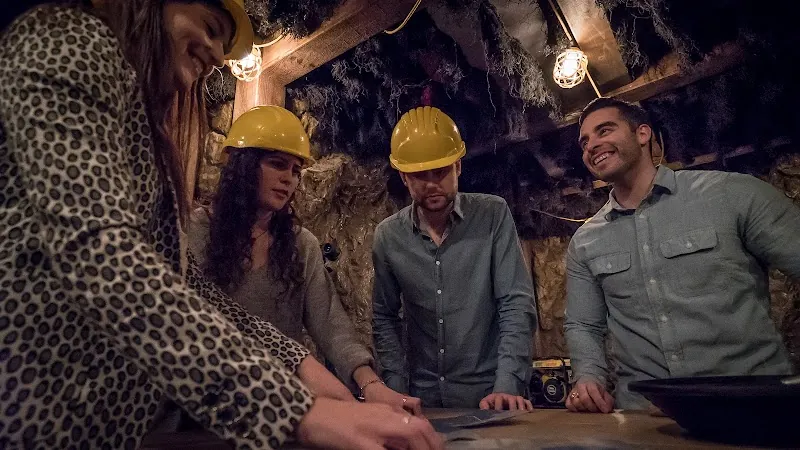
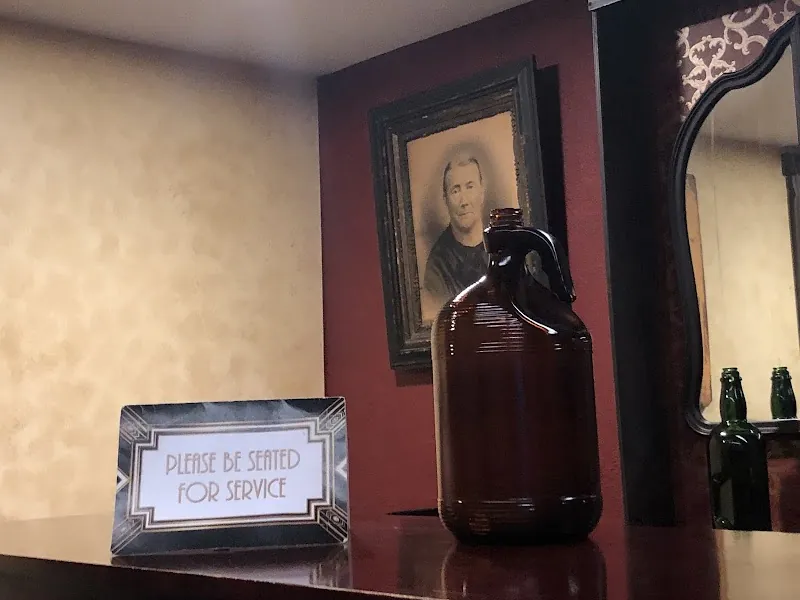
The themes vary wildly. You might find yourself in a haunted mansion, a spy headquarters, a medieval dungeon, or a spaceship with a failing engine. That's one of the things that makes escape rooms different from, say, a board game cafe or a trivia night. You're not just playing a game at a table. You are inside the game. Everything around you is a potential clue.
Worth knowing: most escape rooms are not actually locked from the outside. There's always a way out for safety reasons. The "locked in" part is more of a story device than a literal situation.
2. What You'll Find Inside When You Walk Through the Door
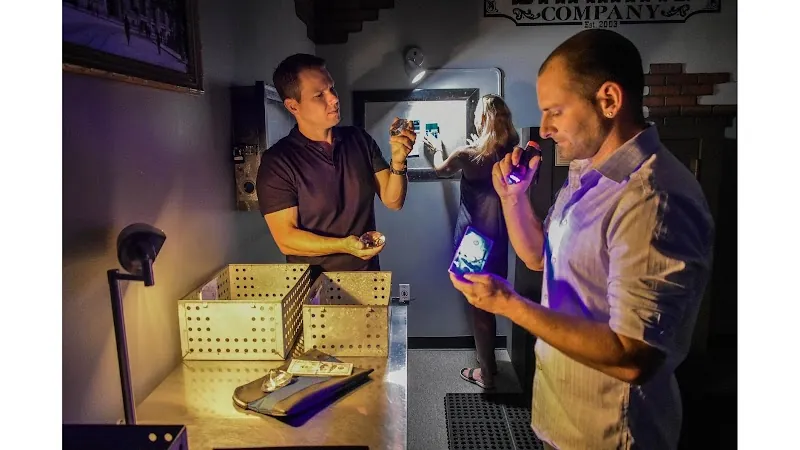
Walking into an escape room for the first time, most people are surprised by how much stuff is crammed into a relatively small space. Expect padlocks, combination codes, hidden compartments, UV lights, and props that look decorative but are actually clues. Good facilities layer their puzzles so that solving one thing opens up the next. It's rarely random.
A game master monitors your session from outside, usually through cameras. They can offer hints if you get stuck, and most places give you a set number of hints or let you ask freely depending on the difficulty setting. Honestly, do not be too proud to ask for hints. Most groups use them.
Some rooms are designed for two to four players. Others can fit eight, ten, or more. Larger group rooms tend to have multiple puzzle tracks running at the same time so everyone has something to do rather than crowding around a single lock. If you're booking for a big group, check the room capacity before you assume everyone can play together.
And yes, some escape rooms have jump scares or actors. Others are entirely puzzle-focused with no horror elements at all. Always check the listing details so nobody ends up somewhere they weren't expecting.
3. How Escape Rooms Differ from Similar Experiences
People sometimes lump escape rooms in with axe throwing, laser tag, or bowling. They're all "group activity" options, sure. But escape rooms ask something different of you.
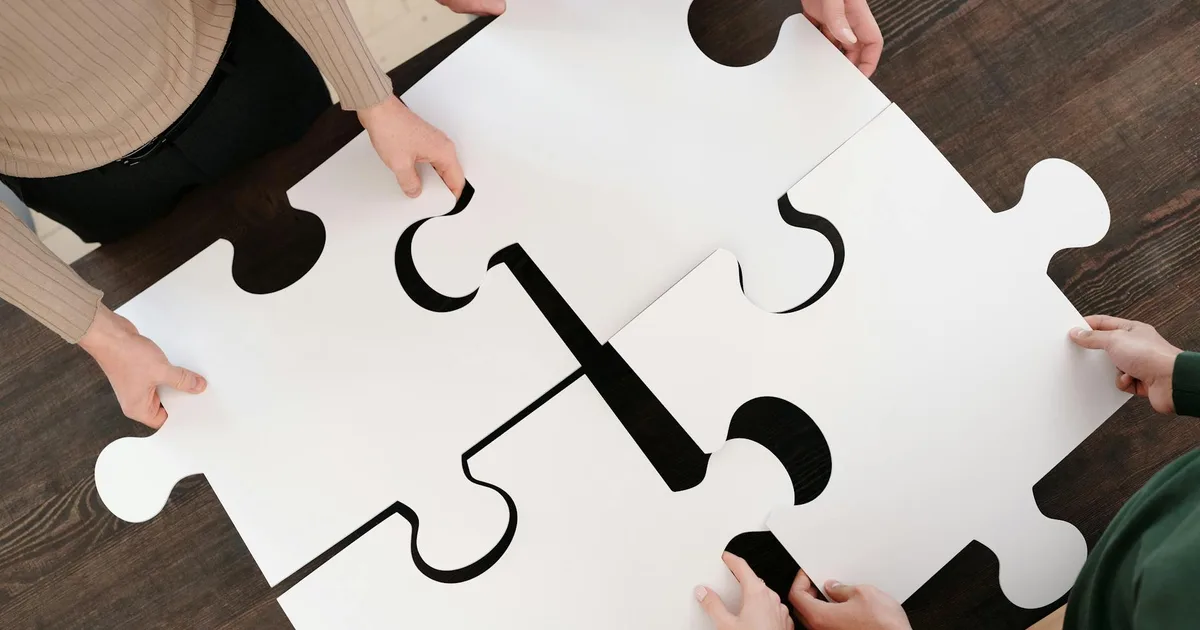
Laser tag is physical and fast. Bowling is social but pretty passive between turns. Axe throwing is satisfying in a very immediate way. Escape rooms are slower, more mental, and require actual teamwork. You cannot really zone out and still contribute. That's either a selling point or a dealbreaker depending on your group.
Immersive theater is probably the closest comparison. Both put you inside a story. But in immersive theater, you're watching actors perform around you. In an escape room, you are the main character doing the work. Nobody is going to solve it for you.
Puzzle cafes are another thing people confuse with escape rooms. A puzzle cafe gives you a table, some puzzles, and a coffee. No timer, no theme, no pressure. Escape rooms have all three. They're a fundamentally more intense experience, even when the room is family-friendly and low-stakes.
If your group includes people who get anxious under pressure, a beginner-level room with a generous hint system is a better starting point than jumping straight into an advanced experience with a strict timer and no guidance. Beginner rooms exist for a reason.
4. What Makes One Escape Room Better Than Another
Not all escape rooms are built equally. Some are elaborate, with custom-built sets, electronic puzzles, and multi-room layouts. Others are more basic, relying on padlocks and printed clue sheets. Neither is automatically better; it depends on what your group wants.
Set design matters more than people expect. A well-built room pulls you into the story and makes the puzzles feel like they belong there. A poorly designed room feels like a storage closet with some padlocks zip-tied to things. You notice the difference immediately.
Reset quality is another thing worth thinking about. Every room gets played multiple times a day, and clues can get moved, broken, or left in wrong positions by previous groups. A well-run escape room does a full reset between sessions. A sloppy one does not, and that can genuinely break your experience if a key prop is missing or misplaced.
Reading reviews before booking is genuinely useful here, not just for the star rating but for the specific comments. Look for mentions of hint quality, staff friendliness, and whether the puzzles felt fair. A 4.9-star average means something, but the individual comments tell you why.
Ready to find your next challenge? Browse the verified escape room listings on Escape Room Pal and filter by location, group size, or difficulty to find a room that fits your crew.